On 18 July 2026, the world marks the 108th anniversary of the birth of uTatomkhulu Nelson Rolihlahla Mandela. More than a decade after his passing, his legacy remains an enduring blueprint for leadership, resilience and human dignity.
Yet anniversaries like these can become ritualistic in nature, we quote Mandela, display his image and celebrate 67 minutes of service, while avoiding the far more difficult question: what would it mean to live by his principles in the conditions confronting South Africa, Africa and the world today?
Global tributes frequently focus on Mandela’s role in defeating apartheid and his universal message of reconciliation. A crucial dimension of his life, however, demands deeper reflection: his profound and mutually sustaining relationship with the African continent. This relationship is too easily forgotten amid growing hostility towards migrants, geopolitical efforts to keep Africa divided, the contest for the continent’s resources, and the scramble for headlines and political visibility as South Africa approaches local government elections. Mandela was not merely a South African icon. He was a committed son of Africa whose worldview, struggle and political philosophy were shaped by and ultimately dedicated to the liberation and unity of African people.
To understand his impact at 108 is to understand South Africa’s debt to Africa, Africa’s enduring debt to him, and the responsibility carried by the generations that inherited political freedom. His journey offers timeless lessons for a contemporary continent navigating the complexities of economic development, democratic governance and geopolitical sovereignty. Madiba’s relationship with the African continent was forged in the crucible of liberation politics.
In 1962, as the first Commander in Chief of Umkhonto we Sizwe (MK), he secretly left South Africa to seek military and financial support for the armed struggle. This journey across the continent was transformative and spanned 16 countries. In Ethiopia, Algeria, Egypt, Ghana, and Guinea, inter-alia he was exposed to the vibrant currents of Pan-Africanism and anti-colonial resistance. It was during this tour travelling under the guise of David Motsamai that he absorbed a fundamental lesson: South Africa’s freedom was inextricably linked to the total liberation of the African continent.
Madiba received military training from Algerian nationalists and Ethiopian imperial forces alike, recognising that ideological differences must be subordinated to the grander goal of African self-determination. When he returned to South Africa, he carried not just tactical knowledge, but a deep-seated conviction that Africa was the natural rearguard of the South African struggle.
Decades later, upon his release from prison in 1990, his first international trips were deliberate pilgrimages of gratitude to African capitals. He flew to Lusaka, Dar es Salaam, Addis Ababa, and Cairo to thank the frontline states and continental bodies that had sheltered South African exiles, hosted MK training camps, and championed the anti-apartheid cause at the United Nations.
He never forgot that countries such as Zambia, Tanzania and Mozambique had paid a heavy economic and human price for supporting South Africa’s liberation, including the consequences of destabilising military campaigns by the apartheid regime. His subsequent foreign policy was anchored in loyalty to these African brothers and sisters. This history is also particularly important in the context of migration. South Africans cannot honour Mandela while treating fellow Africans as permanent outsiders or convenient scapegoats for failures of governance. Migration must be managed lawfully and effectively, and no country can ignore pressure on its borders or public services. But unemployment, inadequate housing, weak service delivery and economic exclusion were not created by migrants, and they will not be solved through xenophobia.
As president and later as an elder statesman, Mandela moved from being a beneficiary of African solidarity to becoming an architect of continental peace. His mediation in Burundi, where he succeeded Mwalimu Julius Nyerere as facilitator of the peace process, demonstrated his distinctive combination of moral authority, persistence and empathetic listening. He was willing to engage opposing parties, but he was equally willing to confront leaders who appeared more committed to power than to peace. Mandela reminded negotiators that the true cost of conflict was not carried by those seated around conference tables. It was carried by children, families, displaced communities and ordinary people whose names would never appear in official communiqués.
His continental diplomacy was also grounded in humility. He resisted positioning democratic South Africa as Africa’s unquestioned hegemon. Despite its economic and military strength, he preferred to work through the collective institutions of the Organisation of African Unity and, later, the African Union. He emphasised partnership over paternalism. In an era of political polarisation, ethnic factionalism and ideological intolerance, Mandela’s commitment to institutional inclusivity remains relevant. He viewed political movements as broad churches capable of accommodating diverse viewpoints under a shared objective. He understood that compromise was not weakness, but an expression of political courage, provided that it did not require the surrender of fundamental principle.
To prevent racial civil war, Mandela negotiated with his former oppressors, accepted difficult compromises and embraced symbols that could help bridge South Africa’s divisions. His appearance in the Springbok jersey during the 1995 Rugby World Cup was not an act of political theatre without substance. It formed part of a deliberate strategy of national reconciliation, nation-building and social cohesion.
That legacy must now be considered against the difficult conditions under which millions of South Africans live. South Africa has a constitutional democracy, independent institutions and rights that previous generations sacrificed greatly to secure. But political freedom has not yet delivered economic dignity to all.
In the first quarter of 2026, South Africa’s official unemployment rate stood at 32.7%, representing approximately 8.1 million unemployed people. About 3.9 million young people between the ages of 15 and 24—37.6% of that age group were not in employment, education or training. These are key indicators which behind them are households without stable incomes, graduates unable to enter the labour market, parents who cannot provide for their children and young people losing confidence in the future.
Persistent poverty sits beside extraordinary wealth. Communities remain divided by the geography of apartheid spatial planning. In many townships and rural areas, schools, clinics, transport, water systems and municipal services fail to provide people with a meaningful platform from which to build their lives. South Africa’s political settlement changed who could vote, but it did not sufficiently transform who owns productive assets, who controls economic opportunity and who benefits from the country’s wealth.
Crime has consequently become more than a policing problem. Murder, gender-based violence, extortion, kidnapping, organised crime and the destruction of public infrastructure have made fear an everyday condition for many communities. Drugs exploit the hopelessness created by unemployment and fractured families. They rob young people of ambition, deepen violence within households and create economies controlled by gangs rather than legitimate enterprise.
Mandela’s belief in human dignity therefore demands more than sympathy for victims. It requires a capable criminal justice system, professional policing, functioning courts, effective rehabilitation, secure borders and sustained investment in prevention. Communities must be protected, but they must also be rebuilt. Corruption is among the gravest threats to Mandela’s vision it converts public office into private enrichment . It is by no means a victimless administrative offence every stolen rand has a human consequence. It may mean a clinic without medicine, a school without safe toilets, a municipality without clean water, a road that remains dangerous or a small business denied a fair opportunity. Corruption weakens the state, protects criminal networks and destroys public trust. When politically connected individuals evade accountability while ordinary citizens face the full force of the law, democracy itself begins to lose legitimacy.
The liberation movement fought against a state that used power without accountability. It would be a tragic distortion of that struggle if democratic power were now used for self-enrichment, patronage or the protection of political allies.
Mandela understood leadership as temporary custodianship of the people’s trust. Contemporary leaders must therefore be judged not by the slogans they repeat, the history they invoke or the crowds they command, but by the integrity of the institutions they leave behind. Ethical leadership means appointing competent people and loyalty to a leader or organisation can never take precedence over loyalty to the constitution and the people.
The crisis of leadership is not confined to South Africa. Across parts of the African continent, citizens continue to suffer because leaders place power, factional interests and political survival above human life. The leadership crisis extends beyond South Africa, as political power and factional interests continue to take precedence over human life. From the humanitarian catastrophe in Sudan and worsening violence in the eastern Democratic Republic of Congo to the death, displacement and deprivation of civilians in Gaza and other conflict zones, the scale of suffering raises an uncomfortable question: have leaders and the international community become so accustomed to bloodshed that outrage now depends on the identity, race, religion or nationality of the victims? Silence in the face of atrocity is not neutrality, and selective compassion is not justice.
Mandela believed in negotiation, but he never believed that dialogue required indifference to suffering. Mediation without accountability risks becoming a means of managing conflict rather than ending it. Neither sovereignty, geopolitical interest nor allegiance should shield any leader or state from scrutiny. The international community must take collective responsibility for protecting human life, strengthening institutions of justice and refusing to allow political power, national borders or strategic alliances to become defences for impunity.
Today, South Africa needs a new social compact rooted in both reconciliation and material change. It must bring together government, business, labour, civil society and communities around measurable commitments to employment, education, public safety, infrastructure, investment and ethical governance.
As we mark Mandela at 108, we must resist reducing his legacy to ceremony. Our generation must turn political freedom into economic dignity, accountable leadership and capable institutions. The greatest tribute to uTatomkhulu is a generation prepared to place service above self-interest and defend human dignity without prejudice. Mandela left us the blueprint; the question is whether we have the courage and moral clarity to build from it.
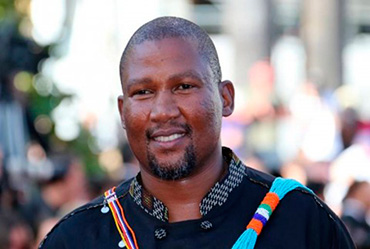
Nkosi Zwelivelile “Mandla” Mandela, chief of the Mvezo Traditional Council and grandson of famed South African President Nelson Mandela. Member of Parliament (MP) South Africa National Assembly. All articles by Nkosi Zwelivelile “Mandla” Mandela