
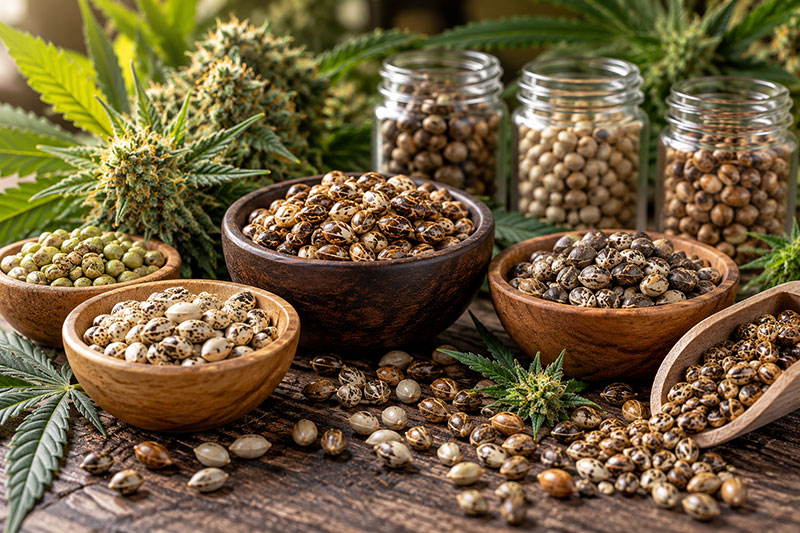
Walk through an Australian cannabis seed catalogue and it is easy to feel overwhelmed by the number of names, genetics, descriptions, and claimed characteristics. One variety may be described as compact and hardy, another may highlight its aroma profile, while a third focuses heavily on its genetic lineage. If you are not familiar with the terminology, comparing them can quickly become confusing.
So, what should you actually look at when comparing cannabis seed varieties?
The answer is not simply the name of a strain or whichever description sounds most appealing. A better approach is to look at the information behind each variety and understand which characteristics are documented, which are based on breeder descriptions, and which can vary depending on genetics and environmental conditions. This is particularly relevant in Australia, where cannabis remains subject to different federal, state, and territory laws.
Start With the Genetic Background
Genetics provide an important starting point when comparing varieties. A product description may identify parent strains, breeding lines, or other information about a variety’s stated genetic background. This can help explain why one variety is described differently from another.
However, genetic terminology should be treated carefully. Names such as “Indica,” “Sativa,” or “hybrid” can provide a broad description, but they do not necessarily provide a complete picture of a plant’s genetic composition. When comparing varieties, look for more specific information such as:
- Stated parentage or lineage
- Breeder information
- Genetic background
- Whether the description distinguishes documented traits from expectations
- Available laboratory or genetic information
The more transparent the information, the easier it is to make a meaningful comparison.
Look Beyond the Strain Name
A memorable strain name can make one variety stand out, but the name itself tells you relatively little. Different businesses or breeders may use similar terminology, and descriptions can vary considerably. Even varieties carrying the same name may not necessarily have identical genetic backgrounds.
This is why it is more useful to compare the information attached to each variety rather than simply comparing names. For example, if one description provides detailed information about lineage and characteristics while another consists mostly of promotional language, the two products are not giving you the same amount of information to work with.
Compare the Type of Information Provided
Not every seed description is written in the same way. Some provide extensive background information, while others focus almost entirely on marketing.
Before comparing varieties, look at what each description actually tells you.
Useful information can include:
- Genetic lineage
- Seed type
- Breeder or producer information
- Stated plant characteristics
- Cannabinoid information, where documented
- Terpene information, where available
- Relevant testing or quality information
- Storage and packaging details
This does not mean a longer description is automatically better. What matters is whether the information is specific, understandable, and presented without exaggerated claims.
Understand That Genetics Are Only Part of the Picture
One of the easiest mistakes when comparing cannabis varieties is assuming that genetics completely determine how a plant will develop.
They do not. Genetics provide an inherited foundation, but environmental conditions can influence how those characteristics are expressed. Temperature, light, water, nutrition, and other factors can all affect plant development.
That means a description of a variety’s expected characteristics should generally be understood as a description of potential or typical traits rather than a guarantee of exactly what every plant will look like. This distinction is useful when reading product descriptions because it helps separate genetic information from promises about outcomes.
Pay Attention to Cannabinoid Information
Cannabinoids are another useful point of comparison when reliable information is available. THC and CBD are the best-known cannabinoids, but cannabis contains many other compounds. Different genetic backgrounds can be associated with different cannabinoid profiles.
When comparing descriptions, consider whether cannabinoid information is actually supported by testing or whether it is simply presented as a general characteristic of the variety. This distinction matters because a product description and an independently verified laboratory results are not necessarily equivalent sources of information.
If cannabinoid information is provided, look at how it has been presented rather than focusing only on a single headline figure.
Consider Terpene Information Too
Terpenes contribute to the characteristic aromas and flavours associated with different cannabis varieties. They can therefore provide another useful way to understand how varieties differ. Some descriptions provide named terpene information, while others use broader terms such as earthy, citrusy, floral, or fruity.
These descriptions can be useful for understanding how a variety is being characterised, but they should not be treated as guarantees. Terpene expression can vary, and marketing terminology is not necessarily the same thing as laboratory analysis. The best comparisons distinguish between documented chemical information and general descriptive language.
Compare the Quality of the Documentation
Two varieties may appear similar at first glance, but the quality of the information available about them can be quite different. When reviewing descriptions, ask:
- Is the genetic background explained?
- Are claims specific or vague?
- Is information attributed to a breeder or source?
- Are laboratory results available where relevant?
- Does the business clearly distinguish expected traits from guaranteed characteristics?
- Are important policies easy to find?
This approach can help you evaluate the quality of the information itself rather than simply choosing whichever variety has the most attractive description.
Consider the Australian Context
Comparing cannabis seed varieties in Australia also requires some awareness of the legal environment. Cannabis laws are not identical across the country, and rules can differ between federal, state, and territory jurisdictions. A product being listed online does not automatically mean that every activity involving it is lawful in every location.
That is worth keeping in mind before making decisions based on information found in a seed catalogue. The broader context is significant: the Australian Institute of Health and Welfare reported that 11.5% of Australians aged 14 and over had used cannabis in the previous 12 months in 2022–2023, equivalent to around 2.5 million people.
That figure describes cannabis use generally and does not relate specifically to seed purchasing, but it provides useful context for understanding why cannabis remains an important subject in Australian public health and policy discussions.
Choosing a Cannabis Seed Source
Once you understand what information to compare, the quality and transparency of the source itself become important.
When comparing different suppliers, look at how clearly the information is presented rather than simply counting the number of varieties available. A catalogue from Sacred Seeds Australia can give readers useful details about individual varieties, making it easier to compare their stated genetics and characteristics.
The goal is to find a source that provides straightforward information without relying too heavily on promotional language, so you can understand what is actually documented about each variety.
Don’t Treat Marketing Claims as Scientific Facts
Marketing is designed to make products interesting, so descriptions naturally tend to highlight appealing characteristics. That is not necessarily a problem. The important thing is knowing where marketing ends and documented information begins.
Words such as “premium,” “exceptional,” “powerful,” or “unique” may communicate a brand’s positioning, but they do not provide the same evidence as genetic documentation or laboratory testing. A useful comparison therefore looks at the underlying information rather than trying to identify the variety with the most impressive-sounding description.
Make a Simple Comparison Checklist
If you are comparing several varieties, creating a basic checklist can make the process much easier.
For each variety, note:
- Genetic background — What lineage is stated?
- Seed characteristics — What type of seed is being described?
- Plant traits — What characteristics are documented?
- Cannabinoid information — Is there supporting data?
- Terpene information — Are specific compounds or profiles identified?
- Source information — Who provides or documents the genetic claims?
- Testing — Is independent or laboratory information available?
- Legal considerations — What rules apply in your state or territory?
This makes comparisons more objective and reduces the temptation to choose based solely on names or promotional descriptions.
Conclusion
Comparing cannabis seed varieties is easier when you focus on the quality of the information rather than the appeal of a particular name. Genetic background, documented characteristics, cannabinoid and terpene information, testing, and the transparency of the source can all help create a clearer picture. It is also important to remember that genetics do not operate independently of environmental conditions, and product descriptions should not automatically be treated as guarantees.
For Australian readers, legal requirements add another layer that should be checked separately. Taking a careful, information-first approach makes it easier to understand how varieties differ without relying solely on marketing language.