
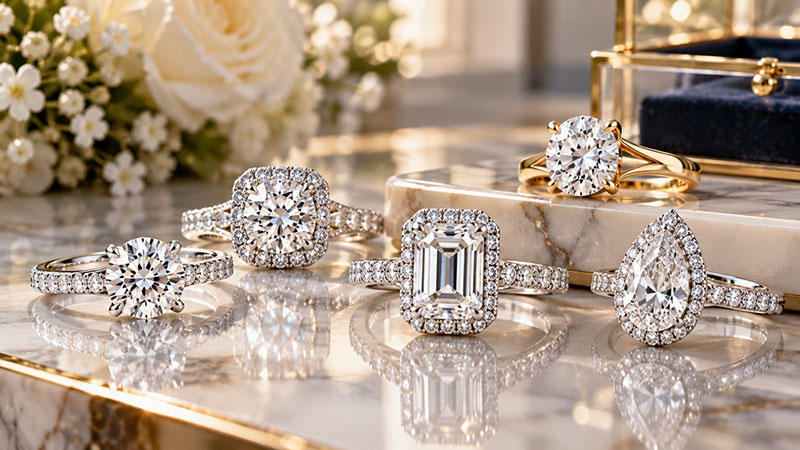
There was a time when an engagement ring’s value came almost entirely from its rarity, a stone pulled from the ground after millions of years, sold through a supply chain few people ever thought too hard about. That framing has quietly lost its grip. Couples today are asking different questions before they buy, and the answers are reshaping what a meaningful ring actually looks like.
Here’s a closer look at why lab grown diamonds have become such a natural fit for how modern couples think about commitment, value, and responsibility.
Values Have Shifted, and Jewelry Is Catching Up
Engagement rings were never just about the stone, they’ve always carried a story about the couple wearing them. What’s changed is which stories couples actually want to tell. Conflict-free sourcing, environmental impact, and transparency now sit alongside classic considerations like cut and clarity, rather than being an afterthought raised only by the occasional skeptical buyer.
This shift shows up clearly in how younger buyers approach the purchase. Rather than treating ethics as a compromise on quality, they increasingly see it as part of what makes the ring feel right in the first place.
It also reflects a broader pattern beyond jewelry entirely. The same generation prioritizing ethical sourcing in engagement rings is often making similar choices in fashion, food, and everyday purchases, treating this as one consistent value rather than an exception carved out for a single big purchase.
The Environmental Case Is Becoming Harder to Ignore
Mined diamonds require significant land disturbance, water use, and energy consumption to extract from the earth, environmental costs that used to stay hidden behind polished marketing. Lab grown diamonds, particularly those produced using renewable energy, carry a meaningfully smaller footprint, since they skip the extraction process entirely.
- No large-scale land disturbance or mining infrastructure required
- Significantly reduced water usage compared to traditional diamond mining
- Growing use of renewable energy in diamond-growing facilities
None of this makes lab grown diamonds automatically perfect, environmental impact still depends on how a specific stone was produced, but it does give couples a genuinely different set of trade-offs to weigh.
Conflict-Free Sourcing Is No Longer a Niche Concern
The term ‘blood diamond’ entered mainstream vocabulary for a reason, and even decades later, questions about a diamond’s origin haven’t fully disappeared. Lab grown diamonds sidestep this concern entirely, since they’re grown in controlled facilities rather than extracted from politically unstable regions.
For couples who want their engagement to symbolize care and intention, knowing exactly where a stone came from, and how it was made, has become part of that symbolism rather than a separate ethical checkbox.
This matters even to couples who never expected to think much about diamond sourcing at all, since the conversation has become common enough that avoiding it entirely now feels like an active choice rather than simple indifference.
The Industry Is Responding to Real Consumer Preference
This isn’t a fringe movement confined to a small segment of eco-conscious buyers. Industry reporting on 2025 engagement ring trends found that lab grown center stones accounted for 61 percent of all engagement ring purchases that year, a 239 percent increase since 2020, driven largely by couples who wanted both better value and cleaner sourcing in the same purchase.
That kind of adoption curve doesn’t happen through marketing alone. It reflects a genuine shift in what couples are prioritizing when they walk into a jewelry store or browse online.
Certification Still Matters, Regardless of Origin
Choosing a lab grown diamond doesn’t mean skipping the diligence that comes with any diamond purchase. Reputable stones, mined or lab grown, should come with grading documentation covering the same 4Cs: cut, color, clarity, and carat. A lack of certification is a red flag regardless of how a stone was made.
Buyers who understand this distinction tend to end up far more satisfied with their purchase, since they’re comparing verified quality rather than relying on a seller’s word alone.
Where the Values Conversation Meets the Ring Itself
This growing overlap between ethics and aesthetics is exactly where lab grown engagement rings have found such a natural audience, since they let couples express both their taste and their values in a single decision, rather than treating one as a trade-off against the other.
Brands like Ritani have leaned into this by pairing lab grown stones with transparent certification and detailed sourcing information, giving couples the confidence that their ring reflects the values they actually hold, not just the ones that look good in a showroom.
Questions to Ask Before Buying a Ring
A few practical habits help translate these values into an actual purchase decision:
- Ask directly about sourcing and production methods rather than assuming ethical claims are automatic
- Request certification documentation regardless of whether the stone is mined or lab grown
- Compare a few retailers on pricing transparency, since markups vary considerably across the industry
Taking the time to research these factors helps buyers choose a ring that aligns with their values, budget, and expectations for quality.
Final Thoughts
A ring has always been meant to say something about the people wearing it. For a growing number of couples, that statement now includes how the stone was made, not just how it looks under light. Lab grown diamonds have made it possible to choose brilliance without quietly setting aside the values that matter just as much as the sparkle.
That alignment, rather than any single feature of the stone itself, is probably the real reason this shift has stuck around instead of fading as a passing trend.