
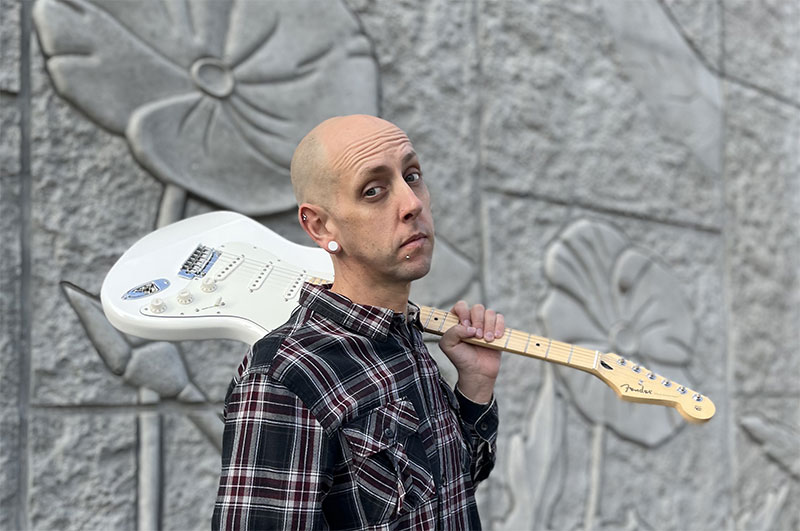
The power of music is one of those few, universally undeniable threads that ties humanity together across cultures. This ability of music to bring people together and overcome boundaries and borders is central to not only the transmission of culture but also broader ideas and ideals about life itself. Christopher Bright and his website, ChristopherBright.com, emphasize this element in its mission to bring more people into the world of music and demonstrate its myriad benefits. When it comes to opportunities within the world of music, Christopher emphasizes the process of searching and discovery.
Likening it to a journey, there needs to be a goal and a destination in mind when looking towards the industry for opportunities. One massive element that has revolutionized everything is the Internet which is essential to the process Bright describes when he talks about searching and discovery in music. The biggest strength here is that the Internet allows individuals to leverage tools at scale in ways previously exclusive to the major labels. This helps artists maintain the necessary aspect of independence both from a major contract as well as the need to produce music that might be outside of their artistic vision. Yet, as he touts innovation and reinvention, Christopher Bright reminds us that his book cautions against “thinking outside of the box” too much.
Why? For many reasons, but one important aspect he discusses is the need for systematic thinking and planning simply because of the many options that are before the modern musician’s fingertips.
Honing in on key elements and emphasizing a form or structure will help guide someone along the path of discovery in much the same way a roadmap or beacon does for travelers. Part and parcel with this is the act of setting goals and sticking to them. Bright emphasizes a method for success rather than it emerging from a wholly organic, unplanned process – contrary to how many people likely perceive music and artistic creation. Rounding out this discussion is the Japanese practice of ikigai, a philosophy core to Bright’s worldview and which helps delineate the contours of his approach.
Your website, ChristopherBright.com, emphasizes the benefits of music. How have you seen music positively impact others?
Music is a magical thing. It can affect our emotions in profound ways. It can make us feel happy, sad, empathetic, brave, or even introspective, and it can help us see beauty in the world around us that we sometimes miss.
Music has numerous benefits. It can be an escape or a chance to take a break from whatever is occupying your mind. It can also help drive a narrative or story forward, which is why music is so important in movies. When a movie has the right music, it helps evoke the right emotions, solidifies the script, acting, and editing, and helps tie everything together. If you’ve ever seen a movie where the music is inappropriate or feels out of place, you’re immediately taken out of the experience.
Another benefit of music is that it’s also good for our minds. As musicians, our minds and our body need to talk to one another, whether we play the drums, piano, guitar, or anything else. Learning the instrument, feeling comfortable with it, and making music takes a lot of practice and discipline. This is great mental exercise, and is also good for hand-eye coordination and great for our imagination as well.
Playing music can also be a retreat, or a place to switch gears. Some of my adult students work hard at very stressful jobs, and then when they come home, they can occupy themselves with something that captures their attention, resets them, and is something fun that they can improve over time. With music, there’s no finish line for how skilled you can become or what you can do with it. It all depends on your creativity, imagination, and dedication to getting better.
I believe that people who study music can improve their success in other areas of their lives because they’re disciplined, they learn step by step and can see (and hear) the results of their hard work, which creates a self-confidence they can transfer to other areas of their lives.
Can you share key insights into discovering and mining opportunities in the music industry without relying on a record label or financial backing?
The word “discover” is very important in answering this question because you have to be searching for something to make discoveries. I am always actively searching for opportunities and doing my best to stay current with what is happening in the industry.
I look at trends on social media and read interviews with successful musicians. I also look outside the music industry for other trends and opportunities that might fit within it.
The internet has played a big part in making it possible to be truly independent and pursue a music career. Before the Internet, the big gatekeepers were the major labels. If you wanted to release music on any type of scale, you had to go through them and get their approval. Then, you had to sign their contracts. When you signed their contracts, in many cases, you could significantly lose your creative freedom.
If you want to be an artist and be honest about what you’re doing artistically, it’s very helpful to be independent. The decisions I make are mine, and they do not depend on me having to answer to anyone else, for better or worse.
Your bestselling book, So You Want To Be a Musician?!, is filled with valuable advice. Can you highlight key lessons from the book that aspiring musicians will find beneficial?
We are often told in modern society that we need to think outside the box. That’s a great concept that can be very beneficial. Sometimes, great visionaries, artists, and people who see things a certain way ask themselves: Why? Or why not? That can lead them to explore different avenues to benefit themselves, or even the world.
However, I think there is a potential danger in always trying to think outside the box. Trying to live inside the box can also be beneficial. By that, I mean giving yourself parameters or limitations on what you do.
I always try to work within a framework and give myself parameters when I’m making music. I sit down to work on a song and then give myself limited options. Do I want a happy song? A sad song? Do I want it to be quiet? Loud? Is it inspired by an image, a movie, or a story? What am I creating here?
I then find a set of sounds to work with, which helps me answer some questions about what direction it’s going to go. If I decide it’s going to be gentle, it won’t be something you hear in the gym when you’re doing cardio. It will be reflective, not extroverted. The sounds will be softer, and I’ll be choosing from a different sonic palette.
When I give myself parameters, I can quickly start something and set the creation process in motion. We think unlimited is always good, but unlimited can make it difficult to make decisions.
If you have the whole spectrum of possibilities at your disposal, it can be overwhelming. When something feels too big to work with, it can slow down your creative process and ultimately make it very difficult to make progress.
Another important aspect is goal setting. Many books and studies discuss the benefits of goal setting and different ways of doing it. In music, my clients say, “I want to get better,” but what does that mean? What does better mean to you?
Suppose you want to learn a song. You have to break the song into parts and figure out the chords in the different sections of the song. Then, you might need to figure out what kind of strumming or rhythm would be appropriate to play with.
If you want to play a guitar solo, for example, a Van Halen solo, something that’s quite intricate, you don’t just sit down and play it.
First, you have to learn the solo by listening to it repeatedly so that you can hear it in your mind. When you can play the solo in your mind, you can start to figure out the notes. Even if you figure out the notes, you may still have to divide them into small sections while learning, and finally, you can combine all the small sections together.
It can really help to practice slowly. One of the things I emphasize as a teacher is that speed is one of the least important things on the list. To have speed, we have to get good first. As you get better at something, speed develops organically. You get faster because it’s easier to do.
It’s not just about setting goals; it’s also about keeping your eye on the finish line. Then, you have to figure out how to get there.
Next, I’d look at the power of momentum, another section in the book. Momentum is incredibly important.
Momentum can be hard to start, but it makes both the journey and your progress move forward more efficiently. If you are working on music (or anything else), and you have to constantly start and stop, it will make the process tedious and frustrating, and it will slow down your progress. When you gain momentum and things start to pick up, you can really enjoy the view. You’ll start noticing new things around you, and you’ll find you’re not having to work as hard as you were.
A good example of momentum would be using music recording software. I use a program called Logic Pro every day of my life. At first, it took me a while to figure things out, but the momentum of using it day in and day out has allowed my workflow to become very fluid. I know how to do exactly what I need to do. I don’t have to think about all the different steps I need to take in any given situation. I’m able to be completely creative. And because I’m creating music every day, I’m comfortable with the software. If I’m feeling creative and I have to stop and think about how to do technical things, my creativity is drained and redirected towards non-creative tasks.
If I have an idea for a song, or I have a melody that comes to mind, I have to get it down fast. If I have to turn on the computer, load the software, and there are ten steps to getting ready to create, my idea will be gone before I get started. Being creative is all about getting everything around you as efficient and comfortable as possible so that you can get your ideas out.
I think this concept also applies to the business world. If you’re able to make your processes as fluid as possible, you can position yourself to be at an advantage. When you can put your focus on the things that really matter, you’re able to look up and see your surroundings much more clearly.
The concept of ikigai, a Japanese term representing the intersection of passion, vocation, and mission, is intriguing. How has it influenced your approach to music, business, and life?
When I initially chose to pursue music as a full-time vocation, I had to really meditate on this idea. I asked myself if music fits these areas for my life—and I found that it did.
Music is something that I love. If I were independently wealthy and didn’t need to work, I would be doing exactly what I’m doing. Creating music is a big part of who I am. I love the process of it. I’ve been passionate about music as far back as I can remember.
If it’s at all possible, you want your career to be something you love. Unfortunately, depending on different life circumstances, we’re not always able to make this choice. In the case that you are able to, you should choose something you’re passionate about and something you love doing because you’re going to have to fully dedicate yourself to it if you want to be successful. If you’re trying to live something you don’t love, that takes a toll on you.
Everyone has moments when work is not fun. I think that’s a normal part of the human experience. But if you are genuinely unhappy or uninterested in your work, it will affect you over time. In my case, I wake up early and go to bed late, and in between, there’s music. There are a lot of challenges, and it’s not always easy, and if I didn’t enjoy it, I would be miserable.
We also need to consider what we can be paid for. Music isn’t just art. Music is expression. Music is beauty. Music is magic. But music is also a global multi billion-dollar industry that’s divided into several different areas, including films, TV, gaming, advertisements, instruments, education, just to name a few. On any given day, you’ll hear music anywhere you go. It’s so ubiquitous that it can’t be ignored. Whether you’re listening to the radio or Spotify, watching TV, or YouTube, walking through a store, or playing a video game, you’re going to hear music. All this music comes from somewhere and was created by someone, and as our world becomes more technologically advanced, there are all kinds of opportunities for musicians.
As an artist who makes a full-time living as a musician, can you share your perspective on the role of AI in the music industry and how you envision its impact on the future of music creation and consumption?
AI is an interesting development, and its implications for the art industry are still unfolding. With the right software, AI can create music and video just by typing into a prompt. However, the use of AI in art raises questions about copyright laws and fair compensation for artists.
These are things musicians, artists, and other content creators will have to pay attention to in the very near future. How does an artist get compensated for their copyrighted work when there are pieces of it being taken from it here and there and assembled into new creations that it wasn’t originally intended for? It will take a while for us to figure out the rules for what’s best for all parties involved. As things stand right now, AI just feels like the Wild West.
On the creative side of things, if we’re doing something in a creative pursuit, we need to look at what makes us human. As more and more things are made by AI, and the market is flooded, I believe we’re going to see a renaissance for handmade goods. For myself as a musician, it’s going to be “music made by a person”. That will be a feature. There’s going to be that artisanal aspect to it. I wrote it, I recorded it, I mixed it—all these things were done intentionally, based on my vision and creativity.
I believe AI will highlight the benefits of humanity because each person is unique. Our little quirks and imperfections make us who we are. Imagine your favorite singers. None of them actually have perfect voices, but they can convey real emotion through their singing. We love listening to their music not because it’s perfect but because it’s human in every way, shape, and form. We must consider how we integrate with AI while keeping our humanity and not trying to avoid the trap of pursuing perfection. Perfect isn’t as fun to listen to as it seems like it would be. It moves really quickly into “uncanny valley” territory.
Your popular music project, LifeIsMySoundtrack.com, explores the connection between life and music. How can individuals leverage this connection to personal growth?
To me, music and life are very, very connected. When I was developing the project and looking for a name, I found myself thinking about life and experiences that moved me. I wondered if music inspired by life could help other people. If it could help be a sort of a soundtrack for their stories. If you’re not having a good day, listening to the right song can make your day a little better. If you’re going through a difficult situation, I believe the right music can help you get through it.
I hope that my music does that. My music is atmospheric and environmental. It’s meant to help people relax and help take their mind away to another place. When life is busy and we find ourselves feeling overstimulated, I think this musical escape can be a really valuable thing, both personally and professionally. So I have these songs that I create that go out into the world, and I hope that they make the lives of whoever hears them a little bit better. If it makes their life a little better, maybe when someone cuts them off while driving, they’ll choose to respond more kindly.
If your stress level is at an eight, and I can bring your stress down to even level seven, that’s a huge accomplishment. That’s going to help your day be better, and that’s going to help you be a better person, someone who’s kinder to others. Some people listen to my music while journaling, which means a lot to me. I often think of them and hope that my music is helping them to get in touch with their feelings better and find more clarity in their lives. I can’t fix every problem in the world but with my music, I can make things a little bit better for someone in their day—and that can spread. There’s a huge connection between the magical quality of music, what it can do for us, and how it can impact our lives.
Can you discuss how the skills you’ve developed as a musician and author have translated into other aspects of your career and life?
The idea of discipline in practicing music has been huge for me. It’s helped me become very disciplined in all areas of life, including exercising and keeping up with all the different tasks that life brings my way. Building the skill of discipline and seeing the results has taught me that discipline works. Because I’ve experienced that success, it’s much easier to trust the process and keep moving forward.
The other helpful thing music has taught me is the power of organization. I have well over 500 songs released for Life Is My Soundtrack, and another 75 or so that are waiting in line to be finished. If I were not extremely organized, there would be no way that I would be able to keep track of everything. And Life Is My Soundtrack is just one part of what I do. I’m involved in many different areas of music, and organization is a crucial part of my success.
I have databases I’ve created to keep track of everything that is currently happening with me, as well as everything I’m planning for the future. I’ve seen huge benefits. It is worth noting that all my systems are constantly being fine-tuned, and as I make new discoveries about tweaks that I can implement, I find ways to be more efficient.
Christopher, how have limitations or constraints fueled your creativity? And what advice do you have for others seeking to turn limitations into opportunities in their creative pursuits?
Limitations, as we discussed earlier, have been a huge help for me in writing songs.
I have a lot of things I have to do every day, just as we all do. The pace of my life is not leisurely. I actually schedule time to work on music. I realize this isn’t exactly romantic, but scheduling gives me consistency, and consistency gives me results. When it’s time to work, that’s exactly what I do. Giving myself a framework of parameters and limitations lets me make decisions quicker. Being able to make decisions and commit to them is very important to helping move things forward.
One strategy I incorporate into scheduling when I work on music is that I purposely don’t set any goals of what needs to get done when I’m creating. All I care about is that I’m putting in the time. I’ve come to trust that if I put in the time, songs get finished. If I worry about needing to finish an arrangement, or finding the right melody for a chorus, I’ve found that my attention moves from being present in the creative process to looking at the clock. When I’m looking at the clock, I’m not making choices because they’re the right choices, I’m making them because of time restraints. A rushed song is not a good song, but a song you spend time with will quickly become a finished song.
One specific way I create with limitations is to purposefully restrict myself to certain sound choices for any given song. This is a fun exercise that allows me to really focus on creativity. It also frees me from analysis-paralysis. If I have unlimited possibilities set before me, the thought of it really slows me down. Should I do this? Or this? Or this?! And it just goes on and on. In my experience, progress can quickly be brought to a crawl if I’m not careful.
One last thing I do that I find to be helpful is scheduling time just for the purpose of auditioning sounds. Over the years, I’ve assembled quite a large library of terabytes of sounds to work with. And with so many choices, it can make finding the right sounds a very slow process. By taking time specifically planned just for auditioning sounds from my library, I’m able to take notes and have a much better sense of the colors I have available for use in any given situation. This also has an added benefit during the creative process, in that it lets me be creative without having to pause everything for several minutes to find the right sound that I’m looking for.
So tell us, how is a day in your life?
As a musician, I’m largely able to work from home, and that’s given me many benefits in terms of being able to be with my family. However, I have to be extra disciplined in my work because otherwise, it’s easy to just hang out at home, and then things aren’t moving forward. So, I plan everything out.
In our house, I’m the first one up in the morning. When I wake up, I try to review the day and figure out the best times to work on different tasks. If I know there’s going to be a lot of commotion at nine o’clock because the kids will be getting ready, I won’t be doing critical things like listening to mixes or masters. I’ll be working on something else that doesn’t rely on silence.
Every day, I practice and record. I absorb some piece of marketing, whether that be watching a video, listening to a podcast, or reading an article or a book. I also tell people what I’m doing. I can make the best music in the world, but if nobody knows about my music, and it’s not out there reaching people and helping them with their day, then I’m not doing what I’m supposed to. So, I’m creating, learning, practicing, and telling the world. That’s what I do every day.
Over time, all those actions progress one inch at a time and help build success. Success is not instant. I want to keep the marathon approach to success. I’m getting a little better each day, and all the inches add up.
What is something most people don’t know about you?
I love history, and I enjoy studying it. I like learning about other cultures, what has happened before us, different people’s lives, and how they change the world. Consider all the different variables throughout life, globally, that have led us to where we are. I love learning about how people live differently than I do because I only have my experience. I’m very hungry for it.
What are two of your favorite quotes?
That’s a great question! The first quote that has recently impacted me is from the amazing producer Rick Rubin, taken from his book The Creative Act: A Way of Being.
“Do what you can with what you have. Nothing more is needed.”
To me, this quote is all about trying to be present and live in the moment. Many of us (myself included) spend much time looking to the future when trying to accomplish tasks. It might be something like, “When I get this new synthesizer, I’ll be able to do X.” In reality, I can and should be creating now. I should use what I have and make it work the best I can.
The second quote that has recently impacted my life is from the legendary surfer, Laird Hamilton.
“There’s a thing about discomfort. Maybe if we lived in a different universe, maybe discomfort wouldn’t be so beneficial. But the universe that we live in at this point, we benefit from discomfort.”
This quote is really challenging for me, personally. I don’t like to be uncomfortable. I don’t think many people do. But I’ve come to find that discomfort has a very important part to play in my life. It’s where growth happens. Consider exercise. To get yourself in good physical shape, you need to exercise, which will require times of discomfort. On the other side of discomfort is physical health. This could be said for all types of activities. How many opportunities for growth do we miss because it involves something we don’t want to do? I think discomfort also promotes gratitude. It can help show us how good things are and point out how good we really have it.
If you had the power to change just one thing in the world, what would it be?
I would want people to be kinder to each other. Everyone’s unique, and there are different cultures, traditions, and histories. All sorts of different variables have helped create who we are, what we are, and our place in society. The thing I’m seeing in the world now is people being less kind to each other. That is a detriment to humanity and society. We do not always have to agree on everything, but even in disagreement, we can be kind and go out for pizza together.
Just like music can make someone’s day a little bit better, being kind to someone can help make their day a little bit better, which helps their interactions with others. I see things in little steps. For example, when I get paid for streaming, I get 0.031247964 cents per stream. I deal in microtransactions, and all these microtransactions add up to making the world a little bit better.
To know more about Christopher Bright, please visit https://christopherbright.com/